HiveTech AI began with a simple question: What if beekeepers could see what was happening inside the hive before it was too late?
In 2020, during the pandemic, Eric Rosow, Principal and co-founder of HiveTech AI, started keeping bees. A mechanical engineer by training and a 30-year healthtech entrepreneur, Eric had spent his career founding and co-founding companies that turned messy, hard-to-access data into clinical intelligence—helping people make better decisions and improve patient outcomes.
As he tended his own hives, Eric began to see a familiar challenge in an entirely different setting. A hive can appear healthy from the outside while problems are developing within. Colonies communicate through subtle changes, and threats can go unnoticed until they become serious.
Eric realized that the same instinct that had guided his work in healthcare could apply to beekeeping: if better data could help us understand what is happening inside a patient, perhaps it could help us understand what is happening inside a hive, too.
That idea led Eric to Akin Tatoglu, CTO and co-founder, a Professor and Associate Dean at the University of Hartford who leads a multidisciplinary research group focused on advanced mobile robotics technologies for applications ranging from hazardous environments to high-altitude operations.
Eric brought decades of experience in healthcare, data, and entrepreneurship. Akin brought deep expertise in robotics, engineering, and applied research. Together, they began exploring how those specialties could be combined to give beekeepers a clearer view into hive health.
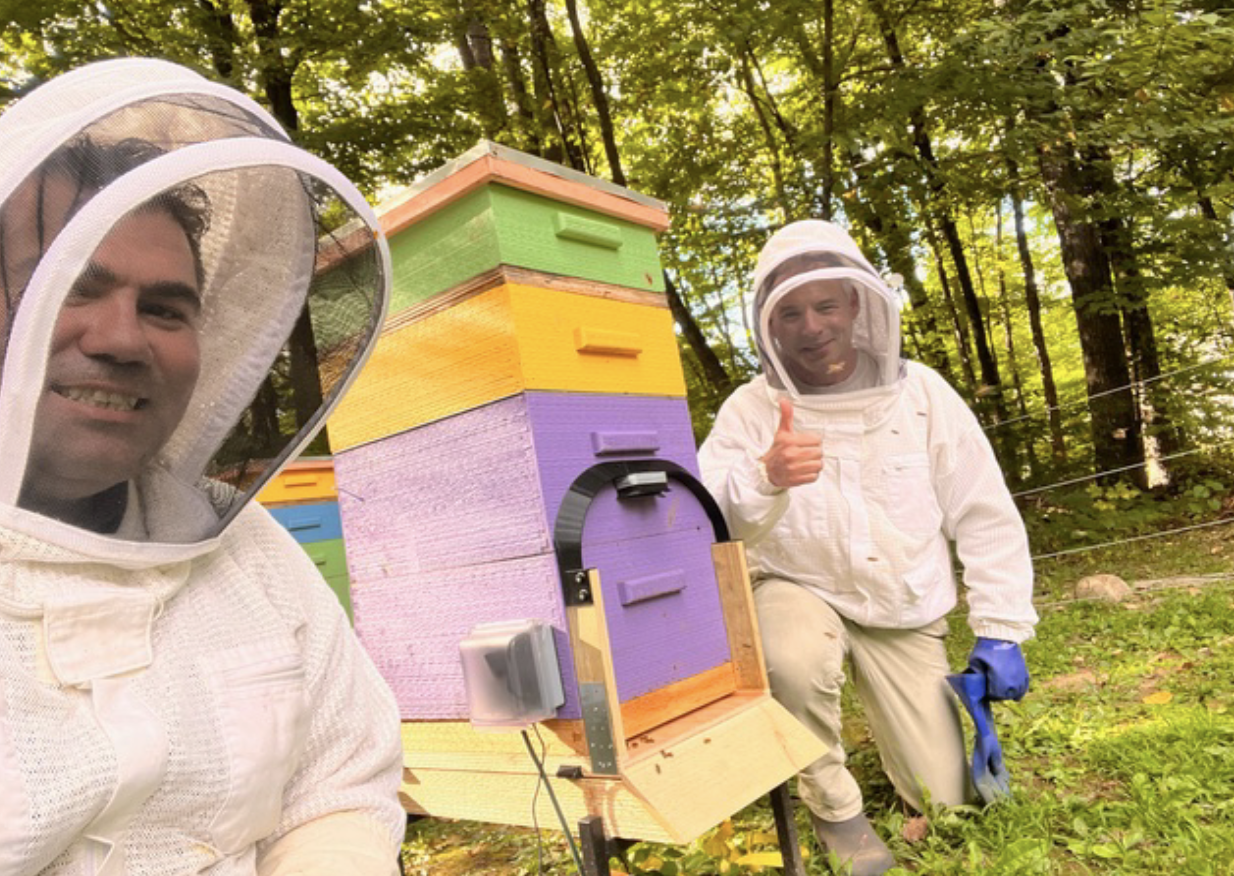
Their collaboration resulted in the first HiveTech AI prototype unit—the beginning of a technology designed not to replace the beekeeper's expertise, but to give them better information to work with.
From there, the HiveTech community began to grow.
Eric and Akin connected with Gregg Lallier, a beekeeper and shareholder whose professional practice focuses primarily on technology, private equity, and venture capital. Gregg brought another essential perspective to the team: the hands-on experience of someone who understands beekeeping from inside the hive.
And, much like pollination itself, one connection led to another.
Akin brought connections from the University of Hartford, opening doors to research, engineering, and academic collaboration. Eric became increasingly connected with the Connecticut Beekeepers Association, strengthening HiveTech AI's relationship with the beekeeping community and the people who understand its challenges firsthand.
Today, HiveTech AI is built around that same idea that sparked Eric's first question: better information leads to better decisions.
We believe technology should work alongside beekeepers—not replace them. By bringing continuous monitoring, artificial intelligence, robotics, and practical field knowledge together, we are working toward a future where beekeepers can identify problems earlier, understand their colonies more clearly, and give their bees the care they need to thrive.